
Hoarding is a Barrier to Aging in Place
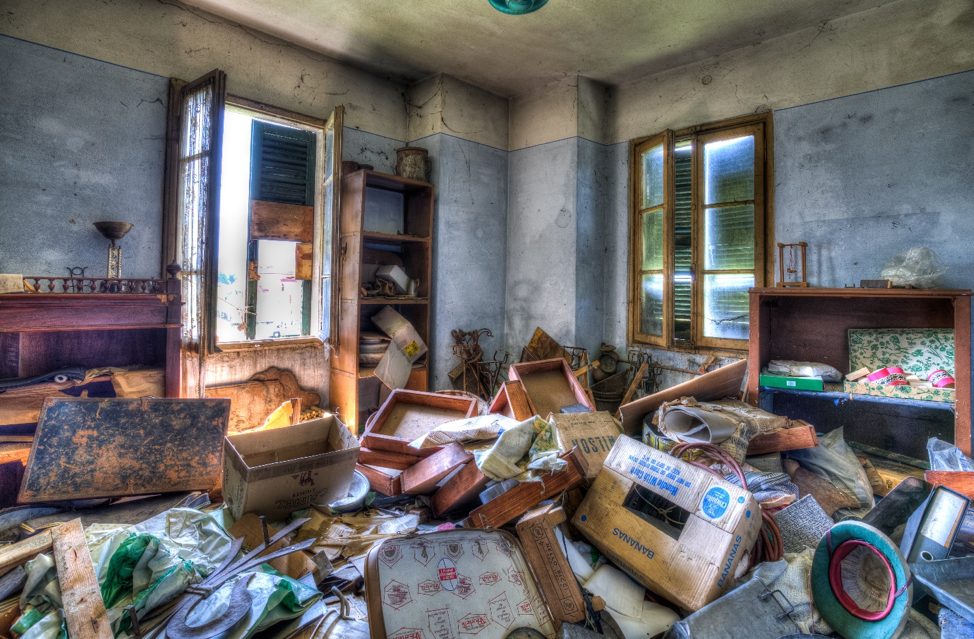
A house is just a place to keep your stuff while you go out and get more stuff.
– George Carlin
Aging in Place / Hoarding and Clutter
Recently a colleague at work called me about an elderly gentleman who he was helping. The older fellow had several issues threatening his ability to remain home “independently.” My friend asked me if I had any resources that may be able to assist the man in maintaining his aging in place status. After listening to the scenario, I wanted to assess the situation and see how I could help. As it turns out the elderly man is a compulsive hoarder. Living alone as a bachelor in one of Portland’s most desirable neighborhoods, he was literally a prisoner buried in his own treasures.
Definition of Compulsive Hoarding
Hoarding is defined as the acquisition of and inability to discard items, even though they appear to others to have no value. People with Compulsive Hoarding syndrome (CHS) have immense difficulty throwing things away, even items of little or no value such as old newspapers, bits of string, worn-out clothes, and junk mail.
Most people with compulsive hoarding disorder are thought to have obsessive-compulsive disorder (OCD). In fact, a third of people diagnosed with OCD have hoarding behaviors. So, the challenge with people who hoard is they are usually oblivious to the problem and resist any kind of intervention.
Randy Frost, Ph.D., one of the country’s leading authorities on compulsive hoarding describes the definition of Compulsive Hoarding as a three-fold process:
-The acquisition and failure to discard, possessions
that appear to be useless or of limited value.
-Living spaces so cluttered that using the room as
intended is impossible.
-Significant distress or impairment in the ability to
function
Frost says: “Our research indicates that they save things for the same reasons we all save things. The difference seems to be that people who suffer from compulsive hoarding apply these reasons to a wider variety of things.”
That wider variety of things presents a wider variety of dangers including:
- Beds and bathtubs so filled with belongings there was no room for sleeping or bathing
Kitchens that were unsafe and unusable due to cluttered stoves, sinks, and tabletops
Large amounts of combustible materials blocking walking paths, radiators and fire exits
No working toilets, sinks, heating and cooling appliances – fearing eviction, they don’t get repairs - Mounds of trash, rotten food, human and animal waste
Insect and rodent infestation - Many unkempt pets in need of care
With the aging of the population, hoarding is increasingly being recognized as a mental health problem that threatens the health, safety, and dignity of older adults. Compulsive hoarding (which often begins in young adulthood) becomes more challenging for older people with multiple chronic health conditions. According to Frost, mobility is an issue in homes filled with clutter. The elderly often forms “goat-paths” among the clutter to move from room-to-room. This amount of clutter increases the risks of tripping and falling; as well as hazardous to emergency personnel should a rescue be needed. These unsafe conditions in the dwelling affect not only the health of the occupant but also put the community and neighborhood at risk.
Psychological Costs
The irony is that CHS suffers are the perfectionist in constant fear of making a mistake. To avoid mistakes they take longer to make decisions–in fact, they spent time “churning;” moving one pile to another instead of getting rid of anything for fear of making a “bad choice.” They are also in need of control and to throw something out is to surrender control of the items over to others.
Family members are often collateral damage as feelings of embarrassment, frustration, or resentment towards the hoarding behavior leads to stress. The clutter also causes social isolation and few social contacts due to lack of visitors to the home. Ashamed of the clutter, family members may attempt to clean up and organize which leads to further chaos and fights.
I read a disturbing story by elder law attorney, Geoff Bernhardt about a couple married for over 50 years. The wife was a compulsive hoarder and the husband was meticulously clean. The difference was so pronounced they had separate rooms in their home; one jam-packed with stuff, the other neatly organized.
When the wife’s health began to decline over time the husband took on the caretaker role. At the end of her life, as she lay dying, her last message to her life-long mate wasn’t “I love you,” it was “please don’t touch my stuff. “This heart-breaking story is evidence of a compulsive hoarder.
See
New Updates:
1. How Common Is It?
Hoarding disorder (HD) affects roughly 2–6% of the general adult population, but in older adults—especially those over 70—the prevalence rises to around 6–13% psychiatry.org+14usaging.org+14community.the-hospitalist.org+14. One U.S. Senate report estimates that up to 6.2% of older Americans exhibit clinically significant hoarding symptoms, compared to about 2% of younger adults . Moreover, community-based studies show that in settings like senior daycare centers and nursing homes, hoarding behaviors are reported in 15–25% of residents axios.com+15pmc.ncbi.nlm.nih.gov+15sciencedirect.com+15.
2. Why It’s Worse in Older Age
Hoarding often starts in childhood but grows steadily—often intensifying in late life due to cognitive decline, increased impulsivity, and the loss of disciplining social support. One study found a 20% increase in hoarding diagnosis for every five years of age, while others connect severity to attention, memory, and decision-making issues in older adults . The clutter not only blocks living spaces but also raises health risks—falls, improper medication use, malnutrition, fire and hygiene hazards—while deepening isolation and emotional distress amadaseniorcare.com+5aging.senate.gov+5axios.com+5.
3. What Can Help—and Prevent Crisis
In 2024–25, the U.S. Senate Special Committee on Aging called for a coordinated national approach, urging improved data collection, awareness, and agency collaboration leadingagemn.org+7aging.senate.gov+7community.the-hospitalist.org+7. Evidence-based treatments like cognitive behavioral therapy (CBT) and structured support groups (e.g., “Buried in Treasures”) show positive outcomes in reducing hoarding behaviors theguardian.com+3verywellhealth.com+3psychiatry.org+3. Practical interventions—light touch clean-up, mental health tracking, and caregiver support—can significantly reduce hazards and respect the individual’s autonomy.
Not Burning Out? Here’s How Communities Can Help
-
Train first responders and aging service professionals to respond delicately to hoarding situations without resorting to forced cleanouts sciencedirect.com+15verywellhealth.com+15aging.senate.gov+15.
-
Expand mental health access for older adults, particularly through home-based or telehealth CBT.
-
Promote peer-led support groups and community programs that reduce shame, restore dignity, and foster safe change.
-
Engage families early—reducing clutter gradually keeps homes safe without isolating seniors or triggering emotional distress.
As America’s population ages, hoarding disorder in older adults is becoming a pressing public health issue. With awareness, compassion, and structured treatment, it’s possible to mitigate risks, preserve independence, and improve quality of life.