Stairs Aging-in-Place Essentials
Stairs are one of the most dangerous areas in any home—and one of the biggest reasons people feel forced to move.
The goal isn’t just safety.
It’s confidence every time you take a step.
Start Here
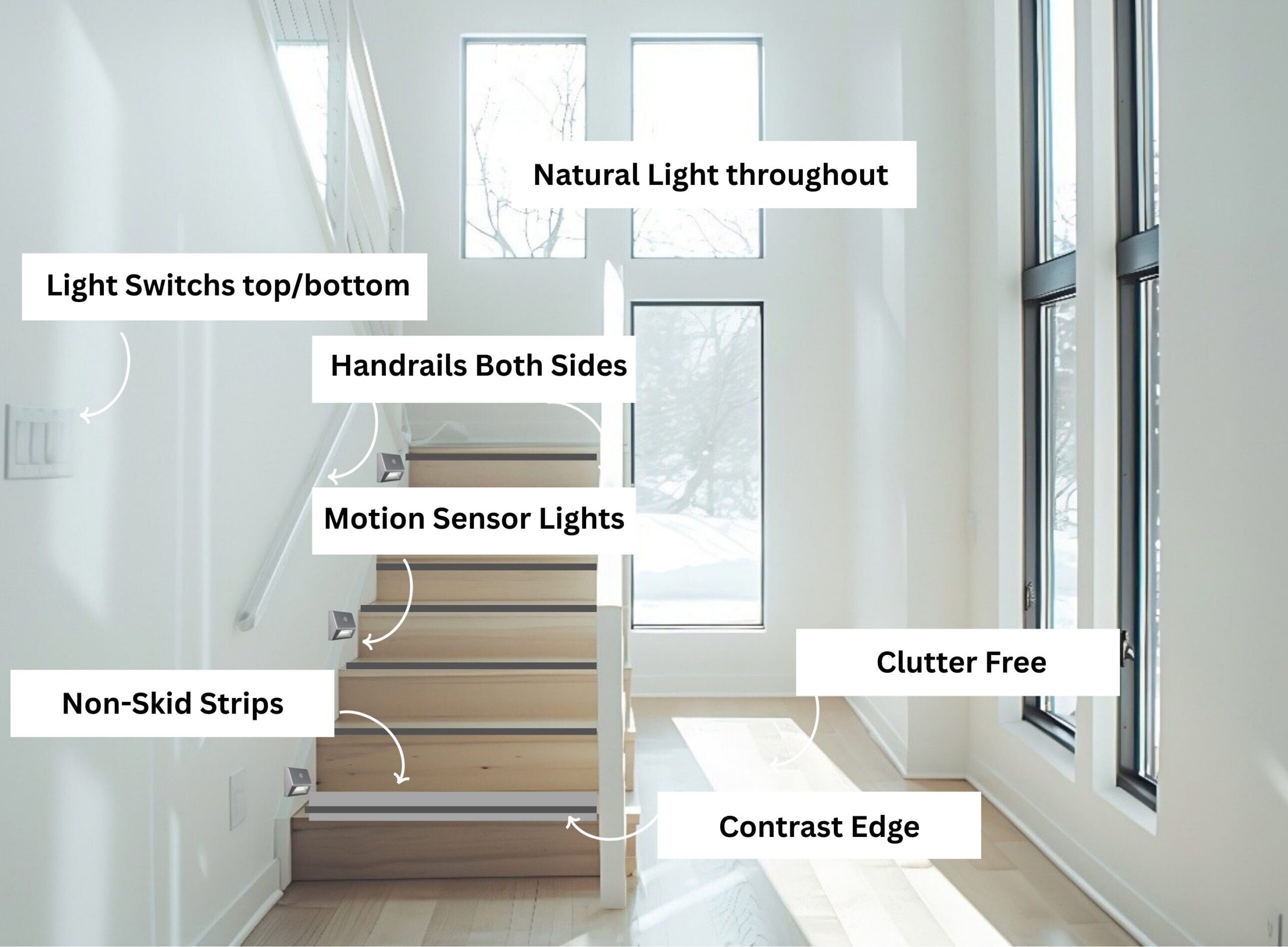
- Install secure handrails (both sides)
Provides balance and continuous support - Improve lighting (top, bottom, and along stairs)
Eliminates shadows and missteps - Add non-slip treads or strips
Prevents slips on wood or smooth surfaces - Mark stair edges with contrast
Helps aging eyes clearly see each step
Core Upgrades
- Add a stair landing light or switch at both ends
No walking in the dark - Install motion-sensor lighting
Automatic safety at night - Use closed risers (no open backs)
Prevents foot misplacement - Add a stairlift (if needed)
Maintains full home access without strain - Widen stairway (if remodeling)
Improves safety and maneuverability
Smart Add Ons
- Motion-sensor stair lighting
- Illuminated handrails
- Smart switches
(voice or app controlled) - Fall detection devices
(watch or sensor) - Camera monitoring
(optional, privacy-dependent)
Note: Aging eyes need more light and better contrast.
Aim for 300–500 lux on stairs, with clear visibility of each step edge.
Quick Stairs Safety Score
Give yourself 1 point for each:
Score: