Bedroom Aging-in-Place Essentials
The bedroom is where rest and recovery happen—but also where falls, disorientation, and nighttime hazards are most common.
Start Here
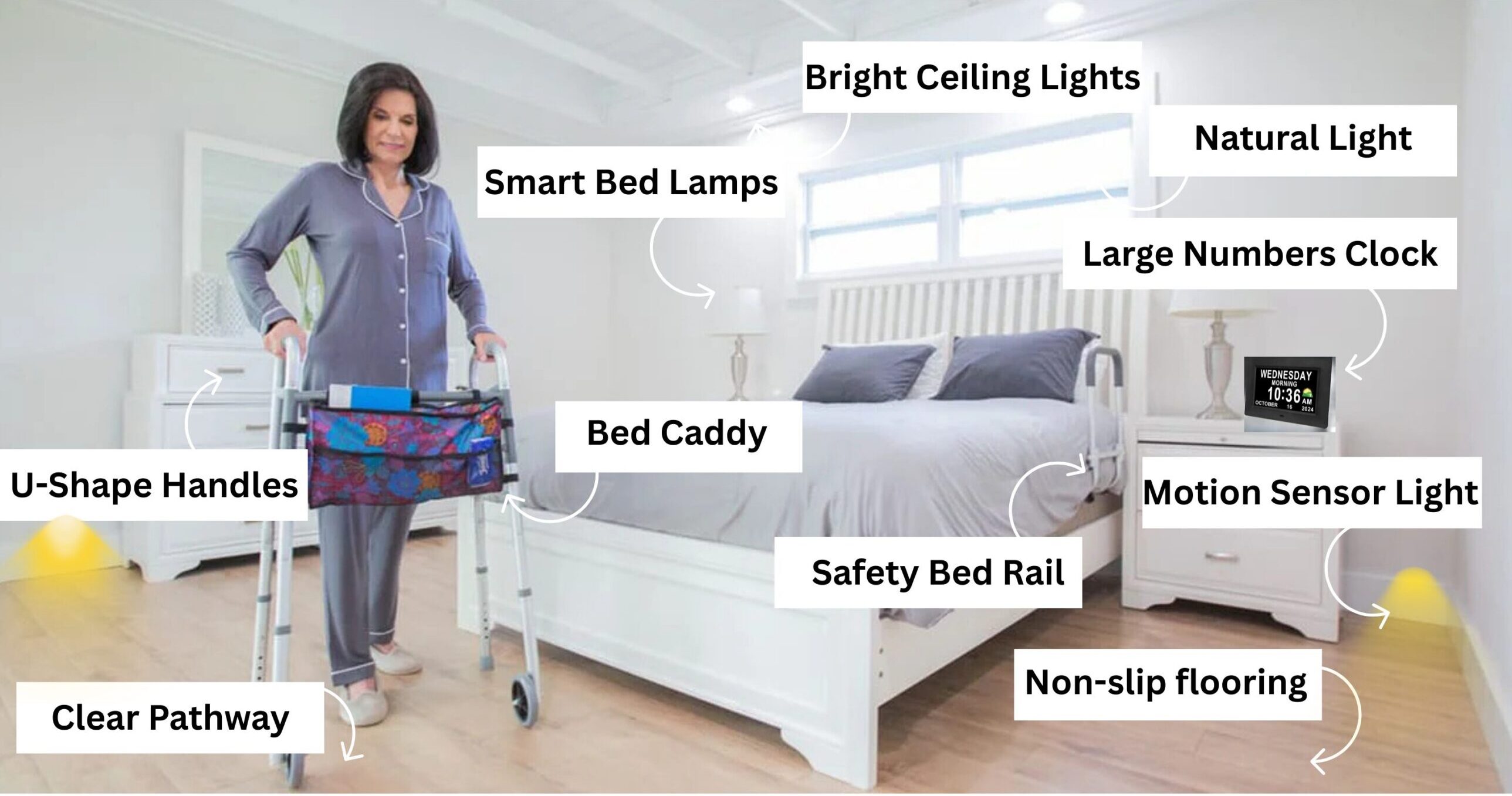
Improve lighting (300–500 lux ambient, 200–300 lux bedside:
Prevent nighttime falls and disorientationToggle Lighted Wall Light Switches:
Add motion-sensor night lighting – Safe path from bed to bathroomUse a stable bed height (17–23 inches):
Easier, safer transfers in and out of bedAdd non-slip flooring or secure rugs:
Reduce fall risk when standing
Core Upgrades
Clear pathways (clutter-free layout) – Prevent trips and improve mobility
Bedside lighting within reach – No reaching or fumbling in the dark
Easy-access storage (no high shelves) – Keep essentials within reach
Lever-style door handles – Easier for limited grip strength
- Closet lighting (automatic or bright LED) – Improve visibility when dressing
- Rounded furniture edges – Reduce injury from bumps and falls
Smart Safety Features
- Motion-sensor floor lighting
Automatic illumination at night - Bed rail or assist handle
Support safe transfers - Voice assistant (call for help, control lights)
Hands-free safety - Emergency alert button or system
Immediate access to help
Quick Bedroom Safety Score
Give yourself 1 point for each:
Score: