
Home Lighting for Aging Eyes
Lighting is the most overlooked factor in aging in place—but poor lighting leads directly to falls, eye strain, and loss of independence.
By age 60+, most people need 2–3× more light to see clearly.
Start Here
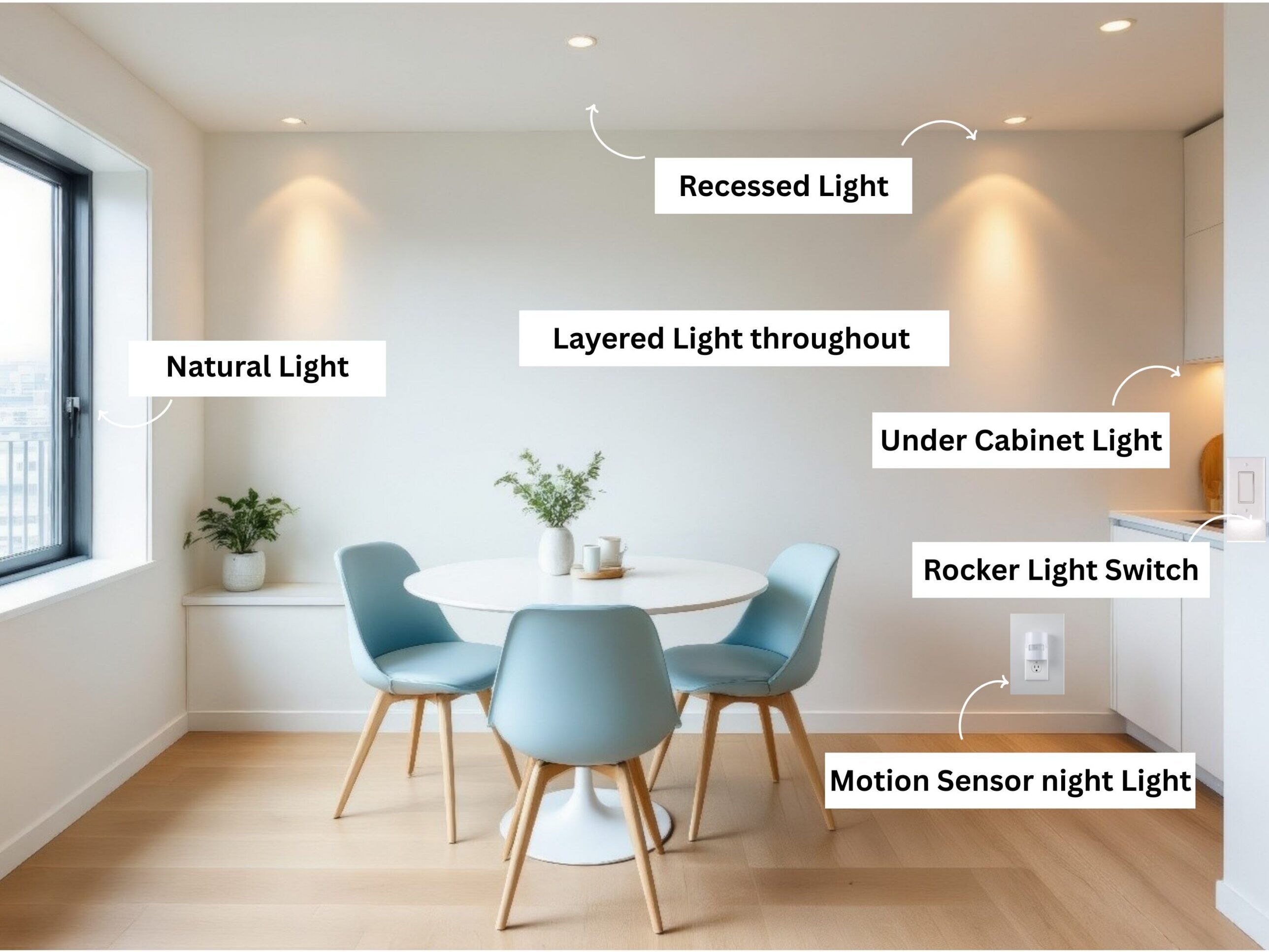
- Increase overall brightness (600–800 lux for seniors) – Aging eyes need significantly more light
- Add strong task lighting (1000+ lux where needed) – Prevent mistakes in cooking, reading, grooming
- Eliminate shadows and uneven lighting – Improves depth perception and reduces falls
- Install motion-sensor pathway lighting (indoor + outdoor) – Prevent nighttime trips and disorientation
Core Upgrades
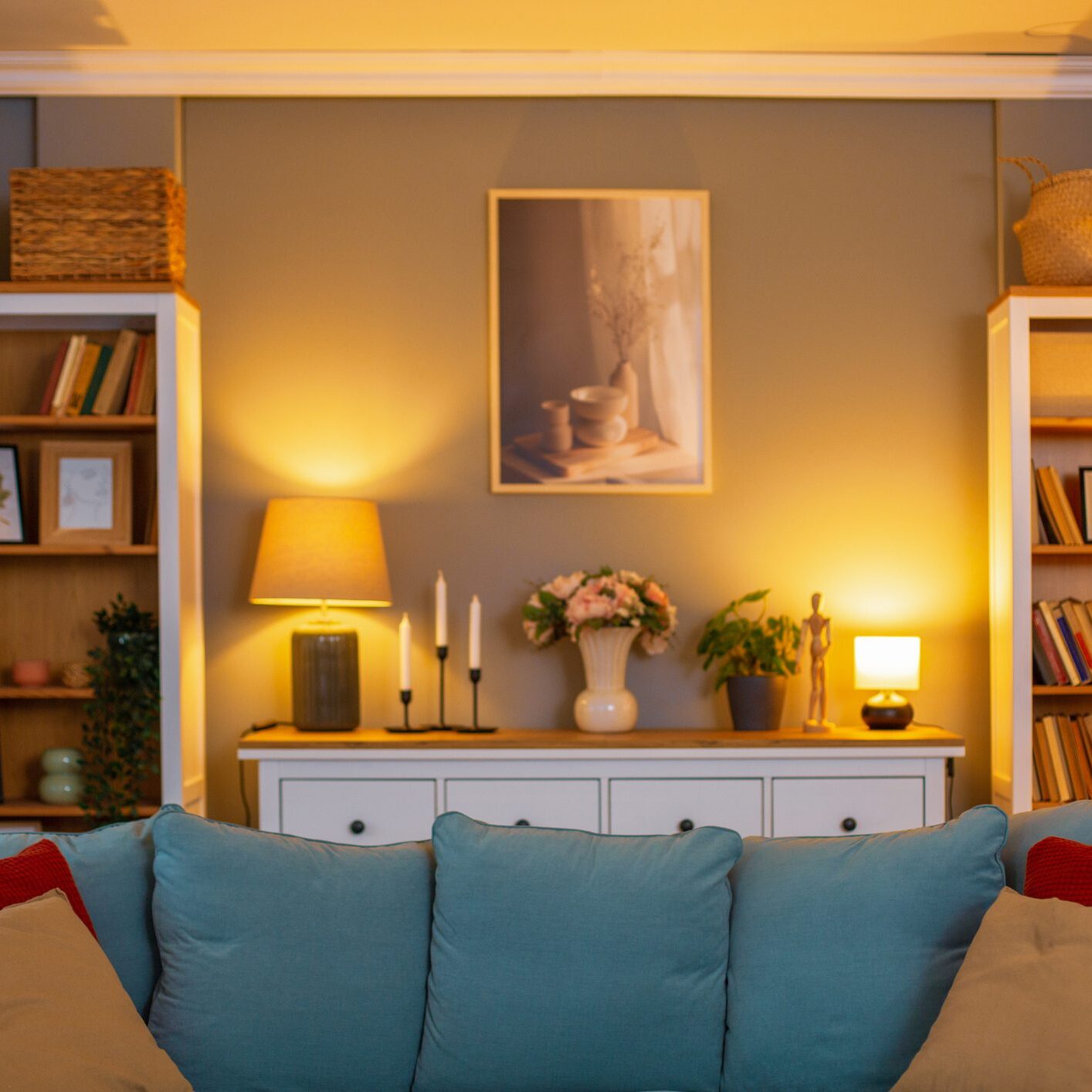
- Layered lighting (ambient + task + accent) – Even, balanced illumination throughout the home
- Under-cabinet and directional lighting – Removes shadows from work areas
- Light switches at every entry point – No walking into dark spaces
- Balanced lighting between rooms – Prevents eye adjustment delays and confusion
- Large rocker-style switches – Easier to use with limited dexterity
- Maximize natural light – Improves mood, visibility, and circadian rhythm
Outdoor Pathway and Lighting
- Pathway lighting (100–300 lux) – Clearly define walking paths, steps, and edges
- Entryway lighting (300–500 lux) – Safe transitions in and out of the home
- Stairs and ramps fully illuminated – No shadows or dark spots
- Motion-activated exterior lights – Hands-free safety and security
- Even, glare-free lighting outdoors – Prevents disorientation and depth errors
Smart Safety Features
- Motion-sensor lighting:
Automatic visibility at night - Smart water shut-off system:
Prevent leaks or overflow damage - Emergency call button or system:
Immediate access to help - Voice assistant: (call for help, control lights): Hands-free safety
Recommended Lighting Levels
- General living spaces (65+): 600–800 lux
- Task areas (reading, kitchen, bathroom): 1000–1500 lux
- Hallways & stairs: 300–400 lux (even, shadow-free)
- Bedrooms: 500–700 lux with bedside task lighting
- Outdoor pathways: 100–300 lux (clear visibility, no glare)
- Night lighting: 50–100 lux
Quick Home Lighting Safety Score (Self-Check)
Give yourself 1 point for each:
Score:
If You Only Do a Few Things
The Bottom Line
Good lighting isn’t cosmetic—it’s preventive safety infrastructure.
It reduces falls, improves confidence, and allows safe movement day and night, inside and outside your home.